We’re In This Together!

Nehemiah 3:1- Then Eliashib the high priest arose with his brothers the priests and built the Sheep Gate; they consecrated it and installed its doors. They consecrated the wall to the Tower of the Hundred and the Tower of Hananel. NASB

If you are like me, the book of Nehemiah doesn’t cause you to get excited about what’s within the chapters. Nehemiah hears about the walls, goes to build the walls, gets the walls built, and the rest is history! After decades of reading this book, it’s never been a book that made me want to preach about it. But during this time of stopping and looking at what is going on in Nehemiah, I must say that I am intrigued by what I am discovering within the chapters of the book of Nehemiah.

In the third chapter, the concept of building or making repairs on the wall is mentioned in every single verse. For example:

Then Eliashib the high priest arose with his brothers the priests and built the Sheep Gate; they consecrated it and installed its doors. They consecrated the wall to the Tower of the Hundred and the Tower of Hananel.

Nehemiah 3:1 NASB

What is so interesting about this chapter is that most of these people were already in Jerusalem when Nehemiah arrived. They saw the walls falling apart and they weren’t inspired to build or repair. These were the same people whom the messengers told Nehemiah about in chapter one:

And they said to me, “The remnant there in the province who survived the captivity are in great distress and disgrace, and the wall of Jerusalem is broken down and its gates have been burned with fire.”

Nehemiah 1:3 NASB

So what happened between chapters 1 and 3 that took the people from being in great distress and disgrace? Nehemiah happened!

Then I said to them, “You see the bad situation we are in, that Jerusalem is desolate and its gates have been burned by fire. Come, let’s rebuild the wall of Jerusalem so that we will no longer be a disgrace.” 

Nehemiah 2:17 NASB

Nehemiah went to Jerusalem. After inspecting the walls, the gates, and the city, he called a meeting of the people who were living in the city. As he spoke to them, he didn’t tell them that they had a problem, he told them that “we” had a problem. He encouraged them to join with him in rebuilding the walls of the city so that they (he included) would no longer be a disgrace. Then Nehemiah stated:

And I told them how the hand of my God had been favorable to me and also about the king’s words which he had spoken to me. Then they said, “Let’s arise and build.” 

Nehemiah 2:19 NASB

Maybe the people weren’t all that interested when Nehemiah stated that the walls needed to be rebuilt to remove the disgrace and despair they were experiencing, but there is something about a testimony! Nehemiah testified of the favor of God in his life. He shared how he fasted and prayed, and went to the king, and how the king not only gave him permission to help build the walls but also gave the provisions necessary to get the job done. As he finished his words of encouragement, the people had only one response, “Let’s arise and build.” These are the people we see in Chapter 3.

We find the high priest and his brothers building the Sheep Gate. And after they finished building it, they consecrated it and installed doors. And next to them, the men of Jericho built. Others made repairs in their section. They worked with their families, and with their neighbors to build or repair what was before them.

Next to him Shallum the son of Hallohesh, the official of half the district of Jerusalem, made repairs, he and his daughters.

Nehemiah 3:12 NASB

I noticed this time around that women worked on the building of the wall. Officials worked on the wall. People who were qualified to build, and people who were not qualified to build worked on the wall. Everybody was working on the wall! And this time, I was moved by what I read in Nehemiah 3.

Although many people had to build in their sections, others only needed to make repairs. Whether they were building or repairing, everybody did their part, and every part was important to the completion of the project. This chapter is a beautiful picture of what can be accomplished when everyone has a mind a work!

It is typically reported that 20% of the people in the church carry 80% of the load of the church. I think more realistically, it is higher than 20%. However, I can safely say that it isn’t 100% of the body doing the work.

Nehemiah had a leadership style that we can learn from. First, Nehemiah included himself in everything that was going on. When a leader in the church is promoting a project, they need to make sure that the people see them involved in the project. No one wants to give up their time to do something that the leader didn’t feel a need to give up their time to do. Nehemiah saw the wall as being his problem and something that he needed to fix. He conveyed this to the people!

Another thing Nehemiah did was to let the people know why they were building the wall. He shared his vision as a vision he had received from God. He told the people that God had already begun to move on their behalf by touching the king’s heart and having the king provide for the project. This encouraged the people causing them to want to work!

For Christmas, our church did a project that was called, Jesus on the Red Line. On a Sunday afternoon, volunteers filled over 5,000 bags with food items to be given out on the Red Line of Chicago’s L train. As the vision was presented to the church, the leader told us that she would meet us there. It wasn’t a pleasant Sunday afternoon, yet hundreds of volunteers showed up to fill the bags. We were asked to fill about 8 bags each. But most people filled more than what was asked of them. There was excitement in the air as we chatted with people we knew and met others. We were excited to do our part!

On the day of distribution, a different group of volunteers showed up to give the bags to passengers as they got off of the L train. Video clips showed both volunteers and recipients of the bags smiling and sharing cheer. Did I forget to mention that both of our churches were involved and we were at every stop between 35th and 95th streets? It was something to see! This project was a beautiful picture of dividing and conquering. Some of us knew we couldn’t get off of work to make the Monday distribution so we stayed on Sunday. Those who went on Monday knew they were available or just wanted to participate in that part of the event. It worked!

This togetherness is what is needed to get the gospel out today. Guilt and manipulation is old news. Few are falling for that tactic today. And not only that, it doesn’t really work. The people of God understand that there is work to be done. What we need are leaders like Nehemiah who know how to seek God for a plan, and then allow Him to help them cast the vision. Then God will move on our hearts and cause us to say, “Let us arise, and get this done!” We are all in this together. There are just some things that won’t get done until we do them together! Wonderful Jesus!


Using Your Influence!

Nehemiah 2:4-Then the king said to me, “What would you request?” So I prayed to the God of heaven. NASB

Photo by Rebrand Cities on Pexels.com

Most of us won’t meet royalty during our lifetime, but we all know people who are in places of prominence. Better yet, some of us are people of prominence with great influence over others. The question for us today is, how are we using that influence to benefit the kingdom of God?

Nehemiah was a person with a level of influence, wealth, and comfort because of his position with the king. As the king’s cupbearer, he had direct communication with the king, sat at the king’s table, and knew others with greater influence than he had.

In chapter 2, we find Nehemiah serving the king his wine, as was his custom, when the king notices that something is wrong with him.

“Why is your face sad, though you are not ill? This is nothing but sadness of heart.” Then I was very much afraid. 

Nehemiah 2:2 NASB

In the previous verse, Nehemiah tells us that he had never been sad in the king’s presence before, and now he is with the king and he can’t hide his feelings, nor can he fake a cheerful heart. The king asks him, what’s wrong? It’s obvious Nehemiah isn’t sick. I’m pretty sure that if Nehemiah was sick he wouldn’t have been allowed to serve the king. After all, his job was to prevent the king from being harmed, and serving him with a sad countenance could have indicated a problem with his wine. So the king quickly assesses the situation realizing that Nehemiah can only be sad because something has happened to cause him sadness. Now Nehemiah is afraid.

The scriptures don’t tell us how long Nehemiah was sad in the presence of the king. We assume it was this one time, but it could have been several times that he was sad and the king decided to finally say something about it. We do know that Nehemiah had been fasting and praying over the situation in Jerusalem. We know this troubled his heart and brought him to tears. But we don’t know how many days he carried this sadness into the presence of the king, although scholars suggest that four months passed between when he got the news and this encounter with the king.

What was Nehemiah afraid of? Was he afraid that the king would get angry because he was sad and have him killed? Was he afraid that if he told the king what was wrong the king would become angry and it would be the end of his time with the king? We don’t know! But we do have examples in the scriptures that lead us to believe that Nehemiah was certainly taking a risk by being sad in the king’s presence.

“May the king live forever. Why should my face not be sad when the city, the site of my fathers’ tombs, is desolate and its gates have been consumed by fire?”

Nehemiah 2:3 NASB

Dr. Tony Evans, in his CSB study bible, wrote something I felt was noteworthy:

Why should I not be sad when the city where my ancestors are buried lies in ruins? He did not identify Jerusalem specifically because he was being shrewd. (In Ezra 4 King Artaxerxes had thought that if Jerusalem were rebuilt its people might stop paying taxes.) Nehemiah avoided the political issue by appealing to the king on a personal level.

Dr. Tony Evans, CSB Study Bible

The king knew that Nehemiah was Jewish. He may not have been aware of what particular city Nehemiah was from, but he was very much aware of his heritage. Whether he was being shrewd, or whether God told him how to answer the king, Nehemiah was concerned about Jerusalem.

Then the king said to me, “What would you request?” So I prayed to the God of heaven.

Nehemiah 2:4 NASB

The king then asks Nehemiah what did he want? Here’s where Nehemiah was given an opportunity by God and the king to see how he would use the influence that he had with the king. For most of us, this would be the time that we ask for something that would benefit us: money, a job, or a connection to someone else. Few of us would think, how can I bless the kingdom of God? Even when we are praying about the kingdom, and involved in service to the kingdom, we can become people who take advantage of our place of influence. Not so with Nehemiah!

Once the king opens the dialogue for Nehemiah to share what was on his heart, Nehemiah starts praying again. He had probably not stopped praying, but he made a point to mention that he prayed. Nehemiah didn’t begin to pray out loud to demonstrate his spirituality before the king. He prayed within himself. Some in the church believe that if you don’t open your mouth and pray, you are not praying. That’s not my experience with God. I have prayed many silent prayers that have been answered. But I also believe in opening my mouth and praying. It depends on the situation, as Nehemiah is demonstrating. This was not the time for open intercession!

Dr. Eric Mason described prayer in this manner,

Prayer is a tool that God has given us to unlock things He wants to do on Earth!

Dr. Eric Mason

This is certainly the thing that happened in Nehemiah’s case. God wanted to do something on Earth, in Jerusalem, and as Nehemiah prayed, God disclosed the plan to him.

Then I said to the king, “If it pleases the king, and if your servant has found favor before you, I request that you send me to Judah, to the city of my fathers’ tombs, that I may rebuild it.”

Nehemiah 2:5 NASB

This was no simple request. For Nehemiah to return to Israel to rebuild the city of Jerusalem, he was going to have to take some risks. He was risking being rejected by the king, or even offending the king, but he knew he had to ask. So he did! When the king responded, he wanted to know how long would Nehemiah need to accomplish this task he wanted to go and do. Nehemiah had an answer and a plan. He had to have impressed the king when he told him exactly what he needed and why, demonstrating that he had given much thought to his request.

People in places of influence typically don’t like their time to be wasted. Nehemiah understood this. He couldn’t ask the king if he could get back to him, he had to answer him immediately. Nehemiah understood what was needed and how to fix it. His time before the Lord had obviously been very fruitful because he had a direction and a plan to share with the king.

There are times in our lives when God places us in situations, positions, or even places where He wants to use us for His glory. A lot of times we think we landed the perfect promotion, were introduced to the upper crust of society, or made the right connection for our personal benefit when it was a setup by God to see if we would remember the kingdom! That doesn’t mean that we get to ask people of influence and wealth to fund our projects in the church. Nehemiah had prayed about this situation and God led him to speak with the king. No one wants to be around people who are always asking them for things. Be careful how you use your access to others.

Nehemiah demonstrated courage when he went before the king with his burden radiating in his face. He showed that he had character when he was able to tell the king when he planned to return. Nehemiah gave the king a sense of comfort when he was able to explain how he was going to accomplish the task. And lastly, he demonstrated commitment to his homeland when he laid everything on the line before the king, including his life.

Every time I hear someone preach from the book of Esther, they sing her praises. They tell how she was willing to go before the king even at the risk of her own life. But in reality, Esther was not the heroine of that story. She had no initial desire to get involved. Her cousin Mordecai had to help her understand that she would perish along with every other Jew in the nation. So she fasted and prayed, then she went. I applaud her for everything she did after she fasted and prayed. Things happen when we fast and pray that won’t happen any other way. But she was not willing to use her influence until Mordecai spoke with her! We are more like Esther before she fasted and prayed than we would care to admit!

As I am going through the book of Nehemiah again, I am impressed with his commitment to prayer. As much time as I spend praying, I know that I can spend more time praying. When I go to the King in prayer, I have influence. I want to make sure that I am not always asking for things to heap on myself. I want to be found using that influence (and I say this with reverence) on behalf of the kingdom of God and not for personal gain. But also know people of influence. They have become dear to me and I want to remember that divine connections happen for the glory of God. But I also want to respect them and not have them believe that I just want something from them. If you are a believer, you are a person of influence. The time you spend with the King of kings gives you access to all that He possesses. How are you using that influence for the kingdom of God? Wonderful Jesus!

Moved to Tears!

Nehemiah 1:4-Now when I heard these words, I sat down and wept and mourned for days; and I was fasting and praying before the God of heaven. NASB

Welcome to 2024! We made it, even though the enemy of our souls didn’t want us to make it! But God is so faithful that He kept us and allowed us to see another day and another year! I am beginning the new year with a study in the book of Nehemiah. I hope you will be a part of it!

January has become the traditional month for church-wide fasting. I’m sure it has a lot to do with pastors wanting their congregations to start the year off with a spiritual bang, but is that happening? As an individual who has participated in this tradition for decades, I have decided to address this tradition based on my understanding of scriptural fasting and prayer.

Nehemiah was the cupbearer to the king of Persia while he was in exile with his countrymen.

Now I was the cupbearer to the king

Nehemiah 1:11b NASB

Charles Stanley, in his Life Principles Bible Notes explained the responsibilities that Nehemiah, the cupbearer possibly held:

As cupbearer to King Artaxerxes of Persia, Nehemiah held a prominent position in the royal court. Nehemiah was far more than a mere servant—his duties included advising the king and acting as his bodyguard and food taster (to make sure no one had poisoned the king’s food). All of these were high-level positions requiring loyalty and trustworthiness.

Charles Stanley, Life Principles Bible Notes

In the first chapter of Nehemiah, he begins to recount an event that changed the course of his life. Nehemiah was in the capital of Persia, a city called Susa. There he saw Hanani, a man he referred to as one of his brothers, and some men who were from Judah. As they chatted, Nehemiah asked them about Jerusalem. Nehemiah was engaging in conversation about his homeland, not realizing his life was about to change. I’m from Louisiana, and whenever I meet someone from Louisiana we talk about life in Louisiana: the food, the weather, the attitudes of the people, etc. So I can imagine that although he really wanted to know how things were going in Judah, he was merely checking on the state of his home. The men shared what they knew about Judah with Nehemiah:

 “The remnant there in the province who survived the captivity are in great distress and disgrace, and the wall of Jerusalem is broken down and its gates have been burned with fire.”

Nehemiah 1:3 NASB

In other words, they told Nehemiah that things weren’t going very well. The people in Jerusalem weren’t happy and prosperous, they were miserable, ashamed of the way things had turned out, and stressed out over their living conditions. The walls of the city were broken down, the gates had burned down, and the people were living in fear because they felt unprotected.

Now if this had happened to you or me, we probably would have responded, “That’s so sad!” Or maybe we would have said something like, “I’m so glad I don’t live there anymore!” But that wasn’t how Nehemiah responded.

Now when I heard these words, I sat down and wept and mourned for days; and I was fasting and praying before the God of heaven.

Nehemiah 1:4 NASB

Did Nehemiah literally sit down in the streets of Susa and begin to weep? I don’t know. But I do know that he was so grieved in his spirit that it caused him to not only weep over the state of Jerusalem but to fast and pray about the situation and the people in Jerusalem.

Nehemiah didn’t just decide to fast and pray, although you can just decide to. Hearing the news from his countrymen pierced his heart and moved him to tears, which led him to fasting and prayer. He either wasn’t with the king at this time, or he was only taking in food when he was tasting it before the king. We don’t know. But we do know by his own admission that he was compelled to spend time with God after he heard the news.

When I think of fasting and prayer, it is my belief that it is done with a purpose. I have heard pastors tell their congregations to fast without telling them why the fast is taking place. I personally don’t agree with that. I have heard congregants be told to fast television, social media, or other activities. However, that is not biblical fasting.

Biblical fasting means that we are to abstain from food for a set amount of time to connect with God. It isn’t just a time of not eating, or removing certain foods from our diet, it is a time of focusing our attention on God so that we can hear from Him. Does that mean that you should probably leave the television off or limit your time on social media? Yes, because that is time that can be spent in prayer or reading God’s word. However, if you stop only those things for a few days, that is not fasting.

Corporate and individual fasting are recorded in scripture in both the Old and New Testaments. Jehoshaphat called a fast in Judah when he heard that a great multitude of enemies were on their way to attack his city. This was definitely a time to get everybody fasting and praying because all of their lives were in jeopardy (see 2 Chronicles 20). They needed God to intervene on their behalf or they could have been destroyed. I don’t know about you, but I don’t need anyone to tell me that I need to fast and pray when danger is headed my way. I’m jumping in with both feet! If a church is under siege for any reason: there have been a lot of illnesses, the finances are lacking to continue ministry, the pastor is under attack, God is changing the direction of the ministry, etc., I can understand the need to call for a corporate fast, and I’m on it!

In Acts 13, we see fasting and prayer in the church at Antioch. As they are fasting and praying, the Holy Spirit tells them that He has an assignment for Saul and Barnabas. They fast and pray, lay hands on them, and send them out to obey God. It was during their time of fasting and praying, that they got direction from the Holy Spirit. So a time of corporate fasting and praying can be beneficial to the church. It just needs to have direction and not just be happening for the sake of saying it is being done.

Personally, I lean more toward Nehemiah’s example of fasting and prayer. I have found that my time of fasting and praying is more effective when I have been moved by God to do it, with or without tears!

I remember a time when a woman in my church was experiencing marital difficulties. One day God spoke to me and told me the exact timeframe when the husband would return home after years of separation. Then He instructed me to fast and pray for three days. I told her what God said to me, and on her own, she decided that she would also fast and pray for those three days. God did exactly what He said He would do.

On the other side of that issue, I have been involved in corporate prayer when God has given me a specific direction that changed my life. I believe in corporate fasting and prayer.

Although we aren’t told that others were fasting, he makes clear that he wasn’t the only one praying.

Please, Lord, may Your ear be attentive to the prayer of Your servant and the prayer of Your servants who delight to revere Your name, and please make Your servant successful today and grant him mercy before this man.”

Nehemiah 1:11 NASB

As Nehemiah prayed, he began to realize that he needed to not just pray about the situations in Jerusalem, he needed to do something! That’s the beauty of fasting and prayer. You may start out confused, burdened, unsure of the next steps; but God has a way of bringing clarity to a situation. Nehemiah understood that he needed to take action and he would need God to touch the heart of the king.

It’s January! We are in a new year with new challenges, new hopes, and new experiences to face. If you are in a church that practices fasting in January, it really is a personal choice whether you fast or not. Because you are the one who knows if you are actually fasting or not. Not only that, if you are not seeking God during that time, you are really just missing meals and it holds no spiritual value whatsoever, so you may as well eat! But should you decide to participate, do so expecting God to meet you and your church during that time! Wonderful Jesus!

HAPPY NEW YEAR!

Photo by Kelly Sikkema on Unsplash

Happy New Year!

We made it into the New Year! This is exciting news! I’m looking forward to writing more blogs, growing into a deeper relationship with the Lord, and getting plugged into ministry! I believe that God has great things in store for me and I can hardly wait to experience them!

I trust that your new year is exciting and filled with hope and many blessings! May God’s abundant grace surround you and your family as you step into 2024! Be encouraged! Wonderful Jesus!

Watch Night Service!

Matthew 26:41- Keep watching and praying, so that you do not come into temptation; the spirit is willing, but the flesh is weak.” NASB

I never really thought about why we celebrate Watch Night service in the church. Especially growing up. I may have even forgotten where it originated before, but our pastor invited us out to this year’s watch night service with a reminder of why we keep it. I thought this would be the perfect topic to end the year with.

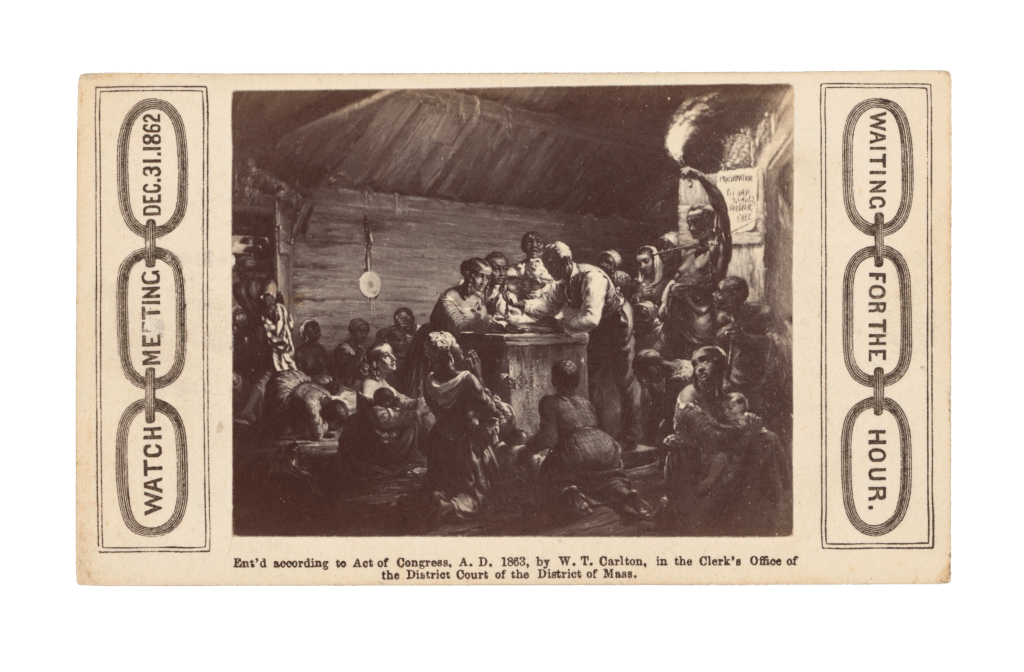
Watch night service can be traced back to 1740 under the leadership of John Wesley (Broussard, 2020). However, in the Black church of America, the first Watch Night service was held on December 31, 1862, as enslaved Blacks waited for the official signing of the Emancipation Proclamation.

Frederick Douglass was among the top Black leaders who had the ear of President Lincoln. He and other Black leaders encouraged President Lincoln to place as much support for Blacks as possible in the Emancipation Proclamation. Not only were they hoping for enslaved Blacks to be freed, but they were asking for Blacks to be allowed to fight for their freedom in the Civil War.

The purpose of the Watch Night service was to pray or hold vigil, during the night for the signing of the Emancipation Proclamation, which Lincoln had promised would happen in January of 1863. Although Lincoln had made a promise, it was feared that something could happen to change his mind, thus the Black people were encouraged to pray all night long for the signing to really occur. Frederick Douglass observed the first watch night service in Rochester calling for vigilance on this important night.

“We were waiting and listening as for a bolt from the sky, which should rend the fetters of four millions of slaves.”

Frederick Douglass, 12/31/1862

In Northern states, these services were held in the open, but in the Southern states, many of these services were held in secret. Not only were they waiting for the signing of the Emancipation Proclamation, but they were waiting for their actual freedom from bondage. History tells us that with the signing of the Proclamation, many enslaved people still did not receive their freedom. As a matter of fact, the last freed enslaved people didn’t receive their freedom until Junteenth of 1865 in Galveston, Texas. Douglass said:

 It is a day for poetry and song, a new song. These cloudless skies, this balmy air, this brilliant sunshine . . . are in harmony with the glorious morning of liberty about to dawn upon us. 

Frederick Douglass, 12/31/1862

This began the tradition of Black churches sponsoring Watch Night services. While most churches may not bring up the past of slavery or the Emancipation Proclamation, they all recognize it as a time of prayer, worship, and fellowship to say goodbye to the old year and, to welcome the new year.

Over the years I have participated in multiple Watch Night services in church, but I have also spent many New Year’s Eve nights at home. My first remembrance of a New Year’s Eve was spent at my bedside praying. Mama had told us that how we end the year would determine how we go through the next one. So we ended it on our knees “praying” so that we would be pray-ers throughout the year.

With my own children, we attended Watch Night service at church. This time was filled with eating and then a variety of activities that led us to the final seconds of the year where we did a countdown! Never once do I recall us connecting those services to our freedom from slavery.

Is that important? I think the most important part of the night is spending it with the brethren as we say goodbye to one year and hello to another year. But now that I know better, I want to do better. And I think the significance of why we first held Watch Night service can be mentioned without it turning into an “ancestral holy night”. Black history is all of our history, and I thought it important to share this part of our history with you today. Wonderful Jesus!

Hark, the Herald Angel Sings! Repost!

Luke 2:13-14- “And suddenly there was with the angel a multitude of the heavenly host praising God and saying: “Glory to God in the highest, and on earth  peace, goodwill toward men!” NKJV

pixabay.com

Christmas is just a few days away, and there is a lot of excitement in the air. As you walk past people they greet you with a “Merry Christmas” or “Happy Holidays” and you smile and return the greeting. It’s such a friendly time of the year.

On the night that Jesus was born, the air was filled with excitement. All of the heavens waited with bated breath as Mary went through the normal course of labor and delivery. They couldn’t wait until God had delivered Himself to the world, in the flesh, as a Babe. Nothing like this had ever happened before and because He was so excited, so were they!

An angel was chosen to make the announcement to the shepherds. As instructed, immediately after His birth, the angel stepped out of heaven and the place of invisibility into the land of visibility and appeared to the shepherds. As the angel became visible, the glory of God shone all around, causing great fear and a holy reverence to come upon the scene. Then the angel spoke:

“Do not be afraid, for behold, I bring you good tidings of great joy which will be to all people. For there is born to you this day in the city of David a Savior, who is Christ the Lord. And this will be the sign to you: You will find a Babe wrapped in swaddling cloths, lying in a manger.”

Luke 2:10-12 NKJV

Before they could take it all in, before they could breathe, the Bible states that suddenly a multitude of the heavenly hosts appeared on the scene. If they were afraid when one angel appeared, they must have been terrified when a host appeared!

In spite of the fact that this was a lot for the shepherds to take in at one time, the heavenly host couldn’t help itself! What they had just witnessed was so magnificent they had to give God some praise. As they praised Him, God allowed the heavens to part or allowed them to become visible, so the shepherds could witness what was happening:

“Glory to God in the highest, and on earth  peace,  goodwill toward men!”

Luke 2:14 NKJV

They gave glory to God for the birth of Jesus. They knew this was no ordinary birth, no ordinary child. I know each of us understands the absolute miracle of the birth of our child, or the child of someone we love. We know it is special, miraculous! But this birth went beyond that! God had entered the world in flesh and they absolutely could not hold their peace a moment longer! Glory to God in the highest!

Peace! God had sent peace through His Son. An opportunity for mankind to be reconciled to Him, to experience peace. Paul wrote this about the reconciliation of man and God:

For He Himself is our peace, who has made both one, and has broken down the middle wall of separation, having abolished in His flesh the enmity, that is, the law of commandments contained in ordinances, so as to create in Himself one new man from the two, thus making peace, and that He might reconcile them both to God in one body through the cross, thereby putting to death the enmity. And He came and preached peace to you who were afar off and to those who were near. For through Him we both have access by one Spirit to the Father.

Ephesians 2:14-18 NKJV

Sweet wonderful Jesus! Peace and goodwill towards men. God’s will is good, and it has been directed towards men. Can I share another verse that comes to mind? I think I will:

In Him we have redemption through His blood, the forgiveness of sins, according to the riches of His grace which He made to abound toward us in all wisdom and prudence, having made known to us the mystery of His will, according to His good pleasure which He purposed in Himself

Ephesians 1:7-9 NKJV

The angels announced at Jesus’ birth, that it was as a result of God’s will that He extended towards mankind, that Jesus came into the world. It was His good pleasure, which He purposed in Himself, Paul summed up, that gives us redemption through His blood, the forgiveness of sins. Glory be to God! This is shouting material!

Every sacrifice in the Old Testament, every law, every statue was poised to point us to the significance of the Person of Jesus Christ, born to Mary, in Bethlehem. Every situation, every event, every recorded instance in the Old Testament was to prepare man for the purpose of God towards mankind, and the time had finally arrived. Jesus was born!

We look back at this event and we rejoice with the angels. But that night, in that field, the shepherds were probably so shocked by what they saw and heard they needed a moment to grasp it all. After the angels left, as suddenly as they had arrived, the shepherds began talking amongst themselves. They probably asked each other some questions about what they saw and heard, but it didn’t take them long to figure out what they needed to do.

So it was, when the angels had gone away from them into heaven, that the shepherds said to one another, “Let us now go to Bethlehem and see this thing that has come to pass, which the Lord has made known to us.”

Luke 2:15 NKJV

Of course, they found things as the angel had said. There was no exaggeration, no wrong directions, nothing to interpret. The angel told them where to go, what they would find, and it was as the angel said it would be.

And they came with haste and found Mary and Joseph, and the Babe lying in a manger. Now when they had seen Him, they made widely known the saying which was told them concerning this Child. And all those who heard it marveled at those things which were told them by the shepherds.

Luke 2:16-18 NKJV

Here’s where it gets to be interesting to me. After the shepherds saw Jesus they went out and made it known to quite a few people that Jesus was born. They told the people what the angel told them about where to find the Savior, and they shared how they had found Him. They told of the multitude of the angelic host that burst onto the scene and gave glory to God! They were so excited that the Messiah, the Christ was born! Here’s what I don’t understand. Luke wrote that those who heard it marveled at what they were told, but he doesn’t say that they rushed to the manger to see Him for themselves!

Isn’t that interesting? They marveled, but they weren’t compelled to go and see the Messiah! Times haven’t changed much. There is truly nothing new under the sun. No matter how much people hear about the Messiah, about how wonderful He is, there will always be those who will marvel but will make no effort to see Him for themselves. Interesting, and sad!

Well, that’s all for now! I have at least one more post I would like to make about the birth of Jesus! Until then, enjoy “Hark! The Herald Angels Sing” by CeCe Winans! Wonderful Jesus!

Joy to the World! Repost!

Luke 2:10-11- Then the angel said to them, “Do not be afraid, for behold, I bring you good tidings of great joy which will be to all people. For there is born to you this day in the city of David a Savior, who is Christ the Lord. 

pixabay.com

For centuries, the Jewish nation has lived with the promise of a Messiah. The prophecies were as real to them, as the Law which they kept. Every child, male and female, learned of the Messiah. They sat a place for Him Who Was to Come every year during the Passover. They learned of Him from their earliest of days, and now, He is come!

The shepherds are out with their sheep. This is truly another clue that Jesus wasn’t born in December. Shepherds typically stay out with the sheep during the warmer seasons, especially when they are expecting lambs to be born. This is not a hidden fact, it is easily discovered with an internet search. It is suggested that the shepherds would not have been out unless they were expecting lambs; however, I’m still leaning towards the fall because of Elisabeth’s pregnancy. Another reason is that these particular shepherds were not just out watching their flocks, but they lived in the fields, sharing protection and responsibilities of caring for their sheep.

As they recline for the evening, suddenly, an angelic being appears before them. Luke writes that the glory of the Lord was all around the angel, and the shepherds were greatly afraid. Not surprising, since most people were afraid when angels appeared.

Then the angel said to them, “Do not be afraid, for behold, I bring you good tidings of great joy which will be to all people. For there is born to you this day in the city of David a Savior, who is Christ the Lord. 

Luke 2:10-11 NKJV

Isaiah spoke of a child being born to us, and here the angel of the Lord tells the shepherds that the Child has been born. Something had to be ringing in their spirits, resonating with what the angel has said in spite of the fear. Maybe their minds went back to that familiar prophecy:

For to us a child is born, to us a son is given; and the government shall be upon his shoulder, and his name shall be call Wonderful Counselor,  Mighty God, Everlasting Father, Prince of Peace.

Isaiah 9:6 ESV

Most of us are familiar with this verse, but let’s go back for a moment to the preceding verses:

The people who walked in darkness have seen a great light; those who dwelt in a land of deep darkness, on them has light shone. You have multiplied the nation, you have increased its joy; they rejoice before you as with joy at the harvest, as they are glad when they divide the spoil.

Isaiah 9:2-3 ESV

Did you notice how frequently the word joy, or its synonyms are used in this passage. The people were walking in darkness, as a result of a sin-infested world, but now they have seen a great light! This Light has caused their joy to increase. They are rejoicing with the joy of the harvest. They are glad as those who have conquered and attained a great spoil over their enemy and can now divide the spoil! This is the language of Israel as it prospers!

When Jesus is born, not only is verse six of Isaiah fulfilled, but also the verses before it. The people of Israel has been walking in darkness. Historically, they have had no contact, no encounters with the God who had done so much for them. They are in subjugation to the Roman empire, living beneath their status as the people of God. Maybe the shepherds have been discussing their plight, wondering where the God of Abraham, Isaac, and Jacob was in their plight. Maybe they were rehasing stories of the days of glory when David ruled the nation. Maybe they are wishing for the day when the Messiah would come and deliver their people! We don’t know!

But what we do know is that an angel of the Lord appears to them and tells them that he has great news for them. News of joy for all the people! A Child is born! The Messiah is come!

And this will be the sign to you: You will find a Babe wrapped in swaddling cloths, lying in a manger.”

Luke 2:12 NKJV

The angel then tells them how they will find the Babe, and how they will know He is the Christ! Only one baby was born that night in Bethlehem, in a barn. After His birth, Mary wrapped Him in swaddling cloths and laid Him in a feeding trough. If they hurry, and they should, they will find Him as the angel described!

And they came with haste and found Mary and Joseph, and the Babe lying in a manger. 

Luke 2:16 NKJV

They found Him! They found the Christ! He had surely come just as the angel had said! They were so excited! They were thrilled! They were told by an angel of the Messiah’s birth and had been given an angelic invitation to go and visit Him while He was only hours new to the world!

Can’t you feel their excitement? What a beautiful experience it must have been for them! As they watched their flocks, they weren’t expecting anything out of the ordinary to happen! But they were given a heavenly display of the glory of God and invited to witness the Savior, the Babe that was given to us!

We’ve been given that same invitation! We too can experience the joy that comes with the knowledge of the Savior! What an impact that night had on the shepherds! What an impact He has had on my life, on the lives of so many others who realize that the Babe born in the manger, was the Man who hung on the cross for our sins! The real joy to the world, is that though the darkness may linger, we have experienced the Great Light!

We’ll look at the other event of this glorious night in the next blog! Please enjoy this rendition of Joy to the World by Chris Tomlin! Wonderful Jesus!

Remember Jesus!

2 Timothy 2:8-9-Remember Jesus Christ, risen from the dead, descendant of David, according to my gospel, for which I suffer hardship even to imprisonment as a criminal; but the word of God is not imprisoned. NASB

Photo by Tara Winstead on Pexels.com

In my previous post, I looked at Paul’s exhortation to Timothy to endure hardship as a good soldier. Those are words of encouragement we can all receive! As Paul continued in his letter to Timothy, Paul told Timothy to “remember Jesus”! For Paul, this was the best reason he could provide for Timothy to endure hardships!

Remember Jesus Christ, risen from the dead, descendant of David, according to my gospel

2 Timothy 2:8 NASB

When Paul is telling Timothy to remember Jesus, the Christ, he isn’t necessarily telling Timothy to take some time to remember the life of Jesus. More probably, Paul is telling Timothy to remember the sufferings of Jesus and although Jesus died, yet He lives! Had the Messiah not suffered for our sins, we would yet be in our sins, lost, and on our way to a Christless eternity! But He lives! Paul was reminding Timothy that suffering isn’t the end of the story!

But for the sake of argument, let’s take some time and remember what Jesus did for us! In 2 Corinthians Paul had this to say about Jesus:

For you know the grace of our Lord Jesus Christ, that though He was rich, yet for your sake He became poor, so that you through His poverty might become rich. 

2 Corinthians 8:9 NASB

Heaven is a wonderful place, filled with His glory and grace, and yet Jesus left His throne in glory to come to earth as a human being. Paul said that Jesus was already rich! After all, His streets are paved with gold! But Jesus was rich in more than what we think of as material riches! As God, He existed without needs or wants. Everything was subject to Him and His will, and He had only experienced eternity! Death, pain, and sorrow was unknown to Him. But as a man, He left all of that behind and became poor! Remember Jesus!

Many think that Jesus lived an earthly life of poverty. If that is so, Joseph was a poor steward of the gifts that he had received from the wise men. As a reader, I infer that no one would travel as far as the wise men did to give Jesus a paltry gift. They didn’t give a bar of gold, a pack of frankincense, and a jar of myrrh to the King. That would not be a gift fit for royalty! Nor would it be worth the travel and trouble they endured to find Him. (Remember the gifts the Queen of Sheba took to Solomon)? I’m not saying Joseph and Mary received gifts that large, but I am sure they weren’t trivial either! My point is that no matter how well-situated He could have been on Earth, it was still incomparable to His heavenly home!

While Jesus lived and proclaimed the gospel of the kingdom, He was hated by many of the Jews, people who wanted Him dead!

After these things Jesus was walking in Galilee, for He was unwilling to walk in Judea because the Jews were seeking to kill Him. 

John 7:1 NASB

What things had He finished? The feeding of the five thousand with two fish and a loaf of bread, walking on water, and teaching the people about the kingdom of God. Which of these things are worthy of a death sentence?

The religious leaders were no better. As a matter of fact they were probably the reason that so many Jewish people had a problem with Jesus! Jesus infuriated them, and their response to him was a greater hatred than the people had. Remember Jesus!

They took Jesus, therefore, and He went out, carrying His own cross, to the place called the Place of a Skull, which in Hebrew is called, Golgotha. There they crucified Him…

John 19:17-18a

This was after Jesus had forgiven the woman caught in adultery, healed the man born blind and raised Lazarus from the dead! They had become selfish, jealous, and even fearful instead of grateful and open to the Messiah!

Therefore the chief priests and the Pharisees convened a council meeting, and they were saying, “What are we doing in regard to the fact that this man is performing many signs? If we let Him go on like this, all the people will believe in Him, and the Romans will come and take over both our place and our nation.” 

John 11:47-48 NASB

What a shame! But that’s not the end of the story!

I remember watching the movie “The Passion of the Christ” in 2004. Having a visual of the brutality that the Savior could have endured tore me up inside. I cried not only during the movie, but for the next several days as I remembered how He suffered for my sins. He endured that punishment because no one else could redeem us and reconcile us back to the Father! This is worth remembering!

Not only did He die a brutal death for our sins, but He rose from the grave and triumphed over the enemy! Hallelujah!

Paul was saying, it is for the exact same reason that Jesus suffered that I am suffering. This is what Timothy and each of us must remember!

Remember Jesus Christ, risen from the dead, descendant of David, according to my gospel, for which I suffer hardship even to imprisonment as a criminal; but the word of God is not imprisoned.

2 Timothy 2:8-9 NASB

Paul reminded Timothy that while he was imprisoned because of the word of God, the word of God itself could not be and was not imprisoned! It was from jail that Paul wrote most of the New Testament! Although he was imprisoned he took advantage of his “time off” from evangelizing to write the letters that encompass the New Testament. The word of God flourished while he endured the hardship of prison life. And Paul wanted Timothy to remember that as Jesus endured the sufferings and paid for it with His life, that he had also endured the sufferings and was about to pay for it with his life. And one day, Timothy might end up in a similar place, but he was confident that Timothy could do it by remembering Jesus!

Nobody likes to suffer! Everyone wants to live a happy, blessed, and trouble free life! Unfortunately, that not real life! So, whether we are facing challenges and difficulties for the cause of Christ, or as a part of living, we just need to remember Jesus!

Jesus has already won the victory for us! He is our example of how to persevere through the storms of life. He has taught us through His own life, that there is victory on the other side of hardship! Rembering all that He has done for us, leaving glory, taking on humanity, enduring the rejection of His people, and the crucifixion has a way of helping us to gain a better perspective on the things that we endure.

If you are in the middle of heartaches, challenges, or disappointments, then like Paul, I encourage you to remember Jesus! He’s been where you are at and understands what you are going through. Not only that, He promises you will get the victory if you will trust Him through it! Suffering wasn’t the end of Jesus’ story, nor the end of Paul’s, and it doesn’t have to be the end of our story! Wonderful Jesus!

Happy Thanksgiving!

I am so grateful for each of you! I can blog every day but if no one reads it, then is it any good? But some of you are so faithful in logging on to see what God has shared with me from His word! I can’t begin to express how much it blesses me to see your likes and comments! And even those of you who just read and keep it moving, I am thankful for you also! From my family to you and yours, have a wonderful holiday! Wonderful Jesus!